From Indonesia Card Show at NICE PIK 2
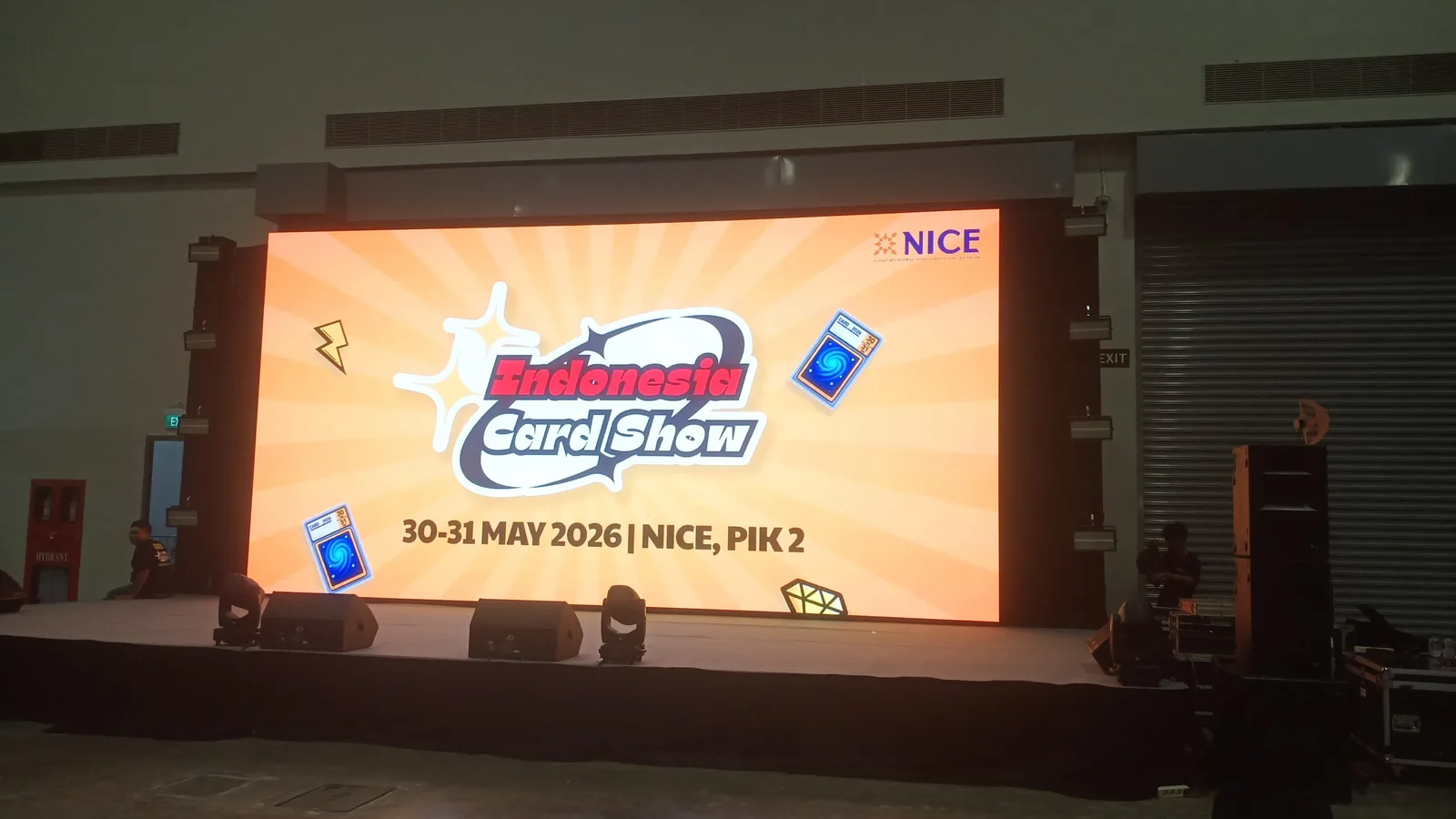
Indonesia Card Show took place at NICE, PIK 2, on 30–31 May 2026. The project photographs show a stage with a large LED screen, moving-head lights and speakers in the exhibition hall. A stage inside an exhibition hall has its own challenges: visitors move freely, booths around it make their own noise, and the event runs for more than one day. Below are points to consider when planning a similar stage. This guidance is general and can be adapted to your own event format.
Place the stage on the floor plan
The stage position decides how many visitors can watch without blocking booth aisles. Ask the venue manager for the floor plan and mark the audience area, emergency routes and neighbouring booths. Avoid pointing speakers straight at booth sales areas. Consider sightlines to the LED screen as well: people at the back need to see the content without being blocked by those in front. Share the plan with the technical team before the site survey.
- Standing or seated audience area and its expected size.
- Visitor and emergency routes that must stay clear.
- Nearby booths that are sensitive to sound levels.
Plan screen content and lighting
In an exhibition hall, the LED screen often marks where the stage is and also shows schedule information. Prepare a content loop for breaks between programmes, such as session times, sponsors and announcements. Moving-head lights help the stage stand out in a bright hall, but they still need to suit the hall lighting so performers' faces read clearly on photo and video. Discuss effect lighting and key lighting as separate needs.
Prepare operations for two days
An exhibition running over several days needs a rundown for each day, not one general rundown. Note the hall opening time, stage session start times and the time available for checks before visitors arrive. Make sure there is a plan for storing small items such as microphones overnight and for who holds venue access. Power supply information from the building manager should also be confirmed early. Appoint one technical contact from the organising team for each day.
- A separate rundown for each event day.
- Time for sound and screen checks before the hall opens.
- Power capacity and outlets confirmed by the venue manager.
Send one brief for the exhibition stage
Put the dates, venue, floor plan, access times, daily rundowns, types of stage programme and screen, lighting and sound needs in one document. Separate essential items from additions still under consideration. Princess sales prepares a quotation after these details have been discussed, so the proposal matches the scale of your stage and the pattern of your event. Attach the on-site contact and any venue rules document as well. If anything changes after the brief is sent, update the same document so everyone works from the latest version.