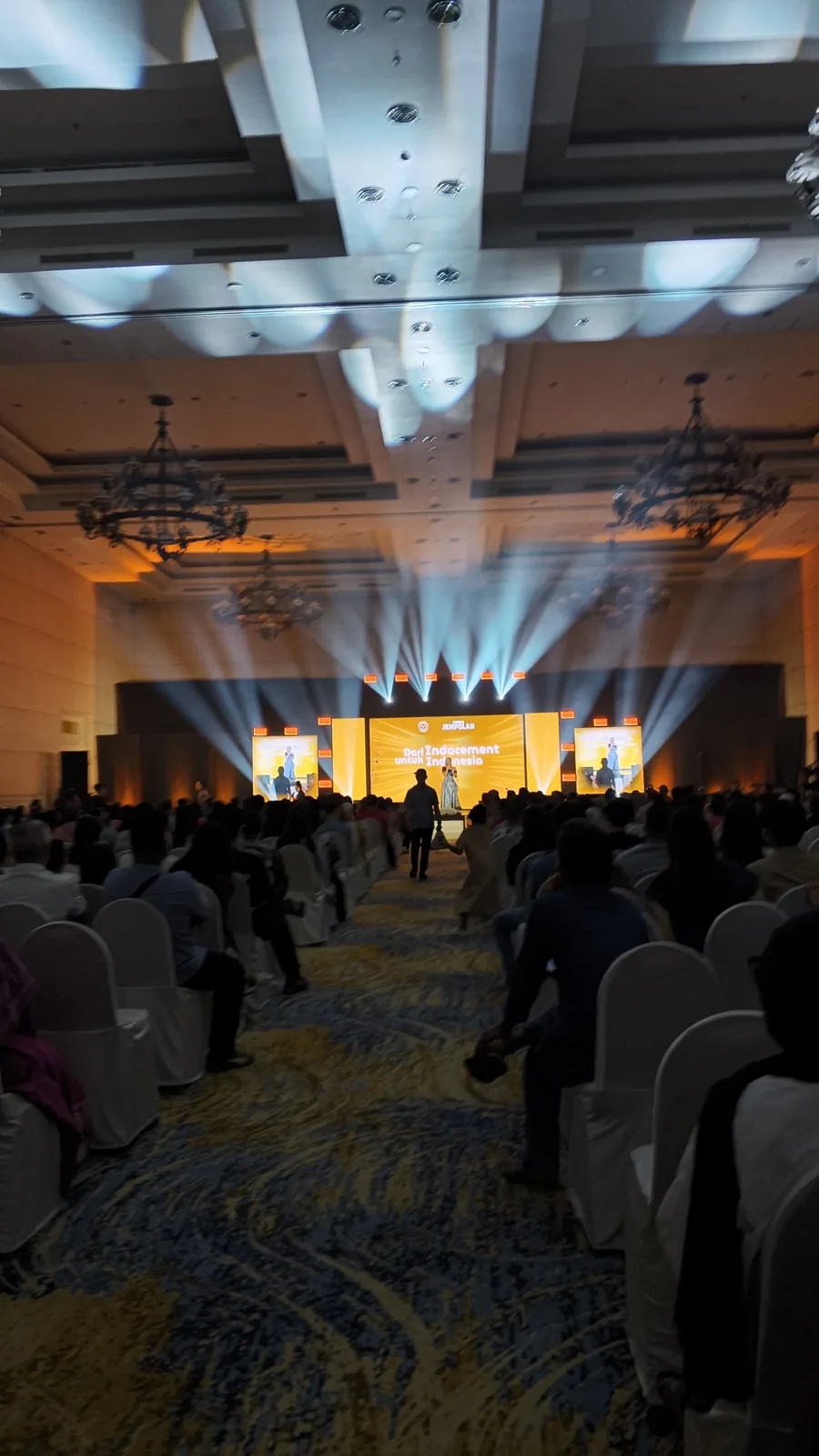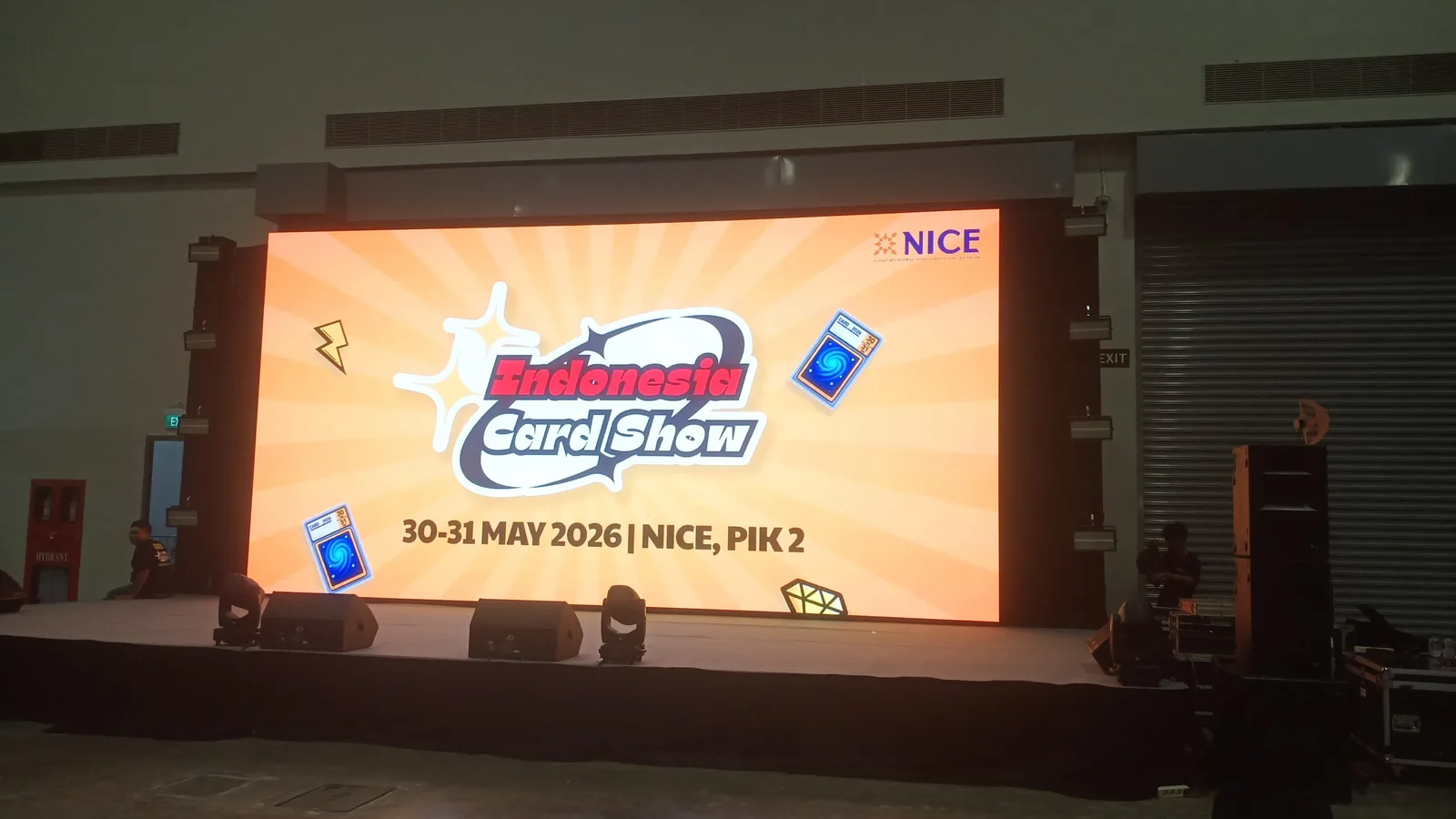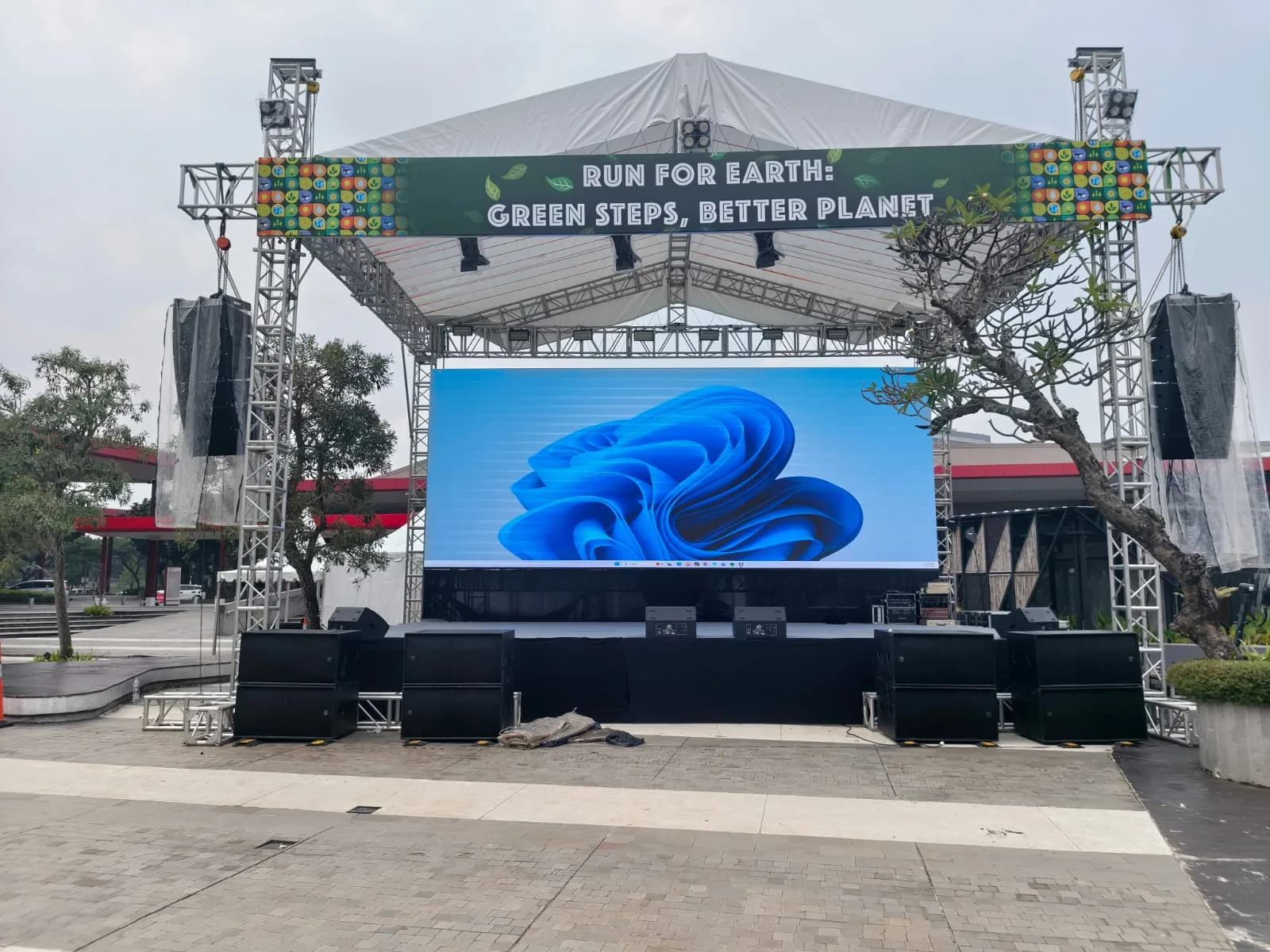
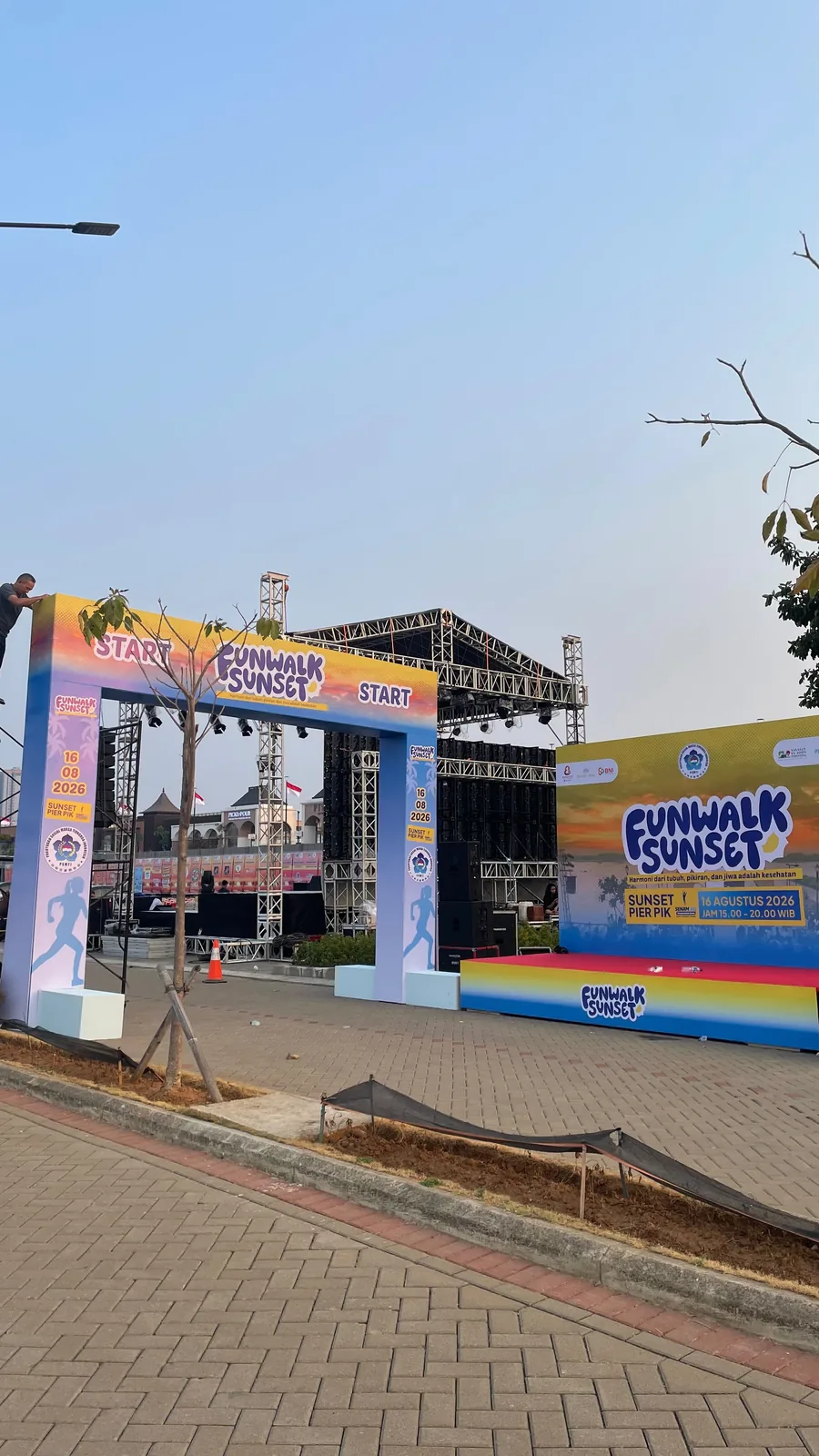
From several outdoor sites
The project photographs from Funwalk Sunset at Sunset Pier, PIK (16 August 2026) show a start gate, a truss stage, and a backdrop during setup. The Run For Earth photographs show an outdoor stage with an LED screen and line-array speakers, and the DWP Mengajar photographs show a stage and guest seating under a tent. Outdoors, power, weather, and timing become part of the technical plan. Here is what to confirm early.
Work out power and generators
Start by asking the site manager how much power is available, where the connection points are, and whether it can be used for the event. Collect power requirements from every supplier, including sound, screens, lighting, catering, and tenants. If site power is insufficient or unavailable, generators can be arranged on request as a supporting requirement. The technical team can help work out capacity, backup, and distribution.
- Capacity and location of power sources on site.
- Total power needs from all suppliers and tenants.
- A generator position away from the audience and safe for refuelling.
Cable routes and safety
Plan cable routes from the power source to the stage, operator positions, and tenants before the event day. Cables crossing walkways need covers to prevent trips, and connections must be protected from standing water. Where possible, separate audio circuits from heavy loads to reduce interference. Decide who controls the distribution panels during the event, and keep generator and panel areas closed to the public.
Weather plan and timing
Follow BMKG weather forecasts in the days before and on the event day. Prepare covers for electronics, a dry area for operators, and a clear decision on when to pause for heavy rain, strong wind, or lightning. Build a technical schedule from load-in, installation, soundcheck, and rehearsal through the show to strike. For late-afternoon events, check the sunset time, because screens and lights look different in daylight and after dark.
- Weather limits and who decides on a pause.
- Equipment covers and shelter for operators.
- Soundcheck time before participants gather.
Send one outdoor event brief
Combine the date, location, site photos, power information, sound and stage requirements, rundown, access hours, and weather plan in one brief. Mention if generators may be needed. Princess sales prepares a quotation after these details have been discussed and the site conditions are understood with your team. Attach the site manager's contact details and applicable rules, including working hours and noise limits, so the technical plan can be adjusted from the start.