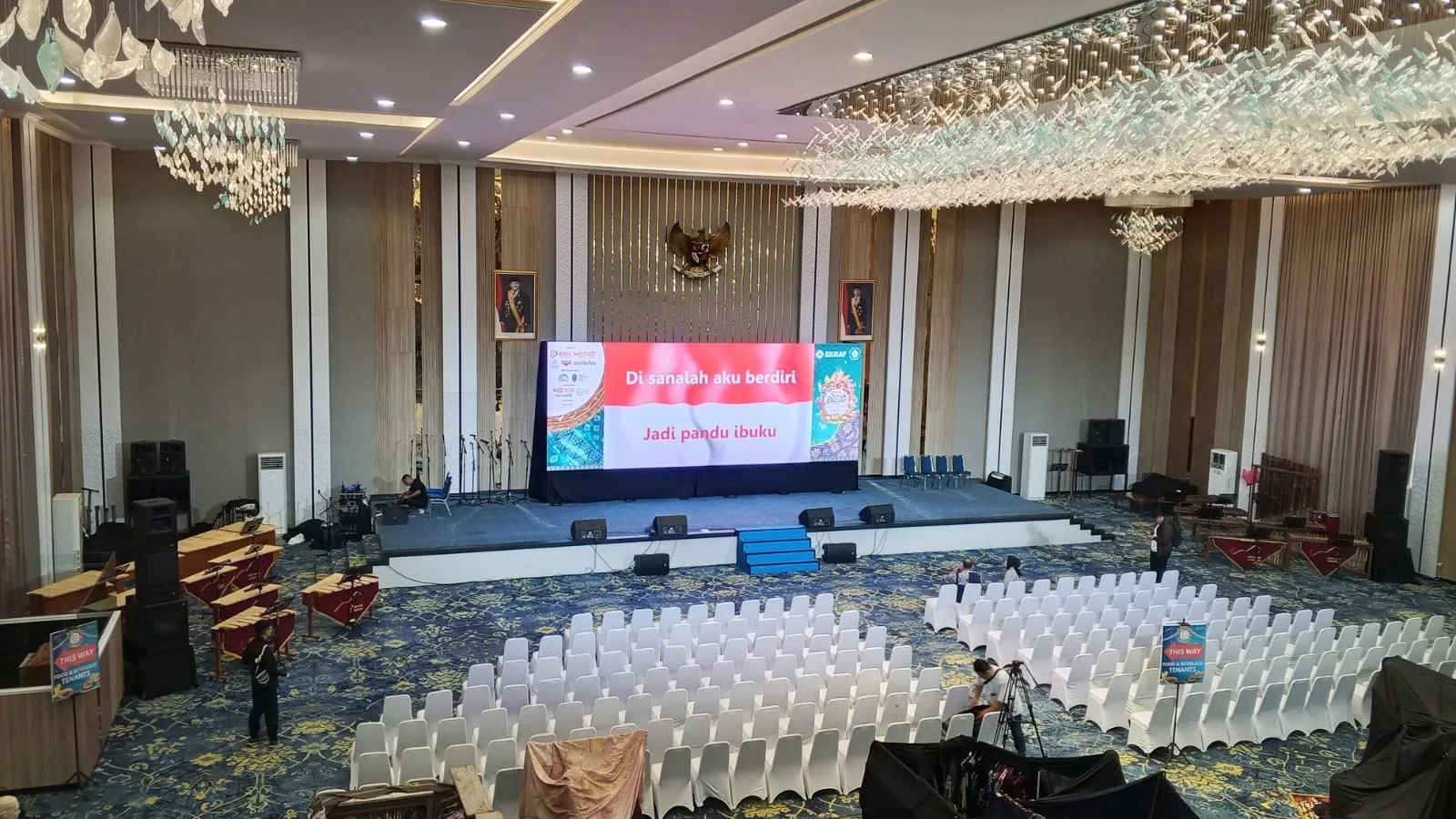
From the EKRAF event ballroom
The project photographs from the EKRAF Event show an LED screen and stage in a ballroom with rows of guest seating, and an operator position with an audio mixer facing the stage. Operator positions like this are often missed in early layouts, yet they determine how well operators can hear and see the event. When planning your own ballroom event, reserve operator space from the first seating plan. That way, guest seating does not need to move on the day.
Why operators should face the stage
The sound operator sets levels based on what they hear in the guest area. If the desk sits in a corner or behind a wall, what the operator hears differs from what guests hear. The LED operator also needs to see the stage to follow changes of speaker, video and presentation content according to the rundown. For this reason, a position in the middle or rear of the guest area, with a direct line of sight to the stage and screen, is usually the starting point for discussion with the event organiser and venue.
Plan space and cable routes
The operator desk needs room for the mixer, laptops, switcher and the crew working there. Cables run from that desk to the stage and screen, so the route needs agreement with the hotel venue. Cable routes that cross guest walkways or service doors must be properly secured. Ask early whether the hotel allows cables across the carpet or requires them along the room edges, as this affects cable lengths and installation time.
- The size of the operator area and the number of guest seats it replaces.
- The cable route from the operator desk to the stage and LED screen.
- The nearest power points and the venue's rules on cable covers.
Coordination during the event
At formal events with many speeches, the running order often changes at short notice. Decide who from the organising team cues the operators and how, for example by two-way radio or by sitting near the operator desk. Bring the same printed rundown for the sound operator, LED operator and MC. If guests of honour may change their timing, agree an alternative running order in advance so operators are ready without waiting for new instructions.
- One named person from the organisers responsible for cues.
- A list of video and presentation files in rundown order.
Send one brief the team can work from
Combine the date, venue, access times, layout, rundown and technical requirements in a single version of the brief. Attach the seating plan with a proposed operator desk position. Separate essential items from optional extras still under consideration, and mark anything not yet final. Also include a contact who can be reached during preparation. Princess sales prepares a quotation after discussing these details with you, so the equipment and crew list follows the actual conditions of your event.