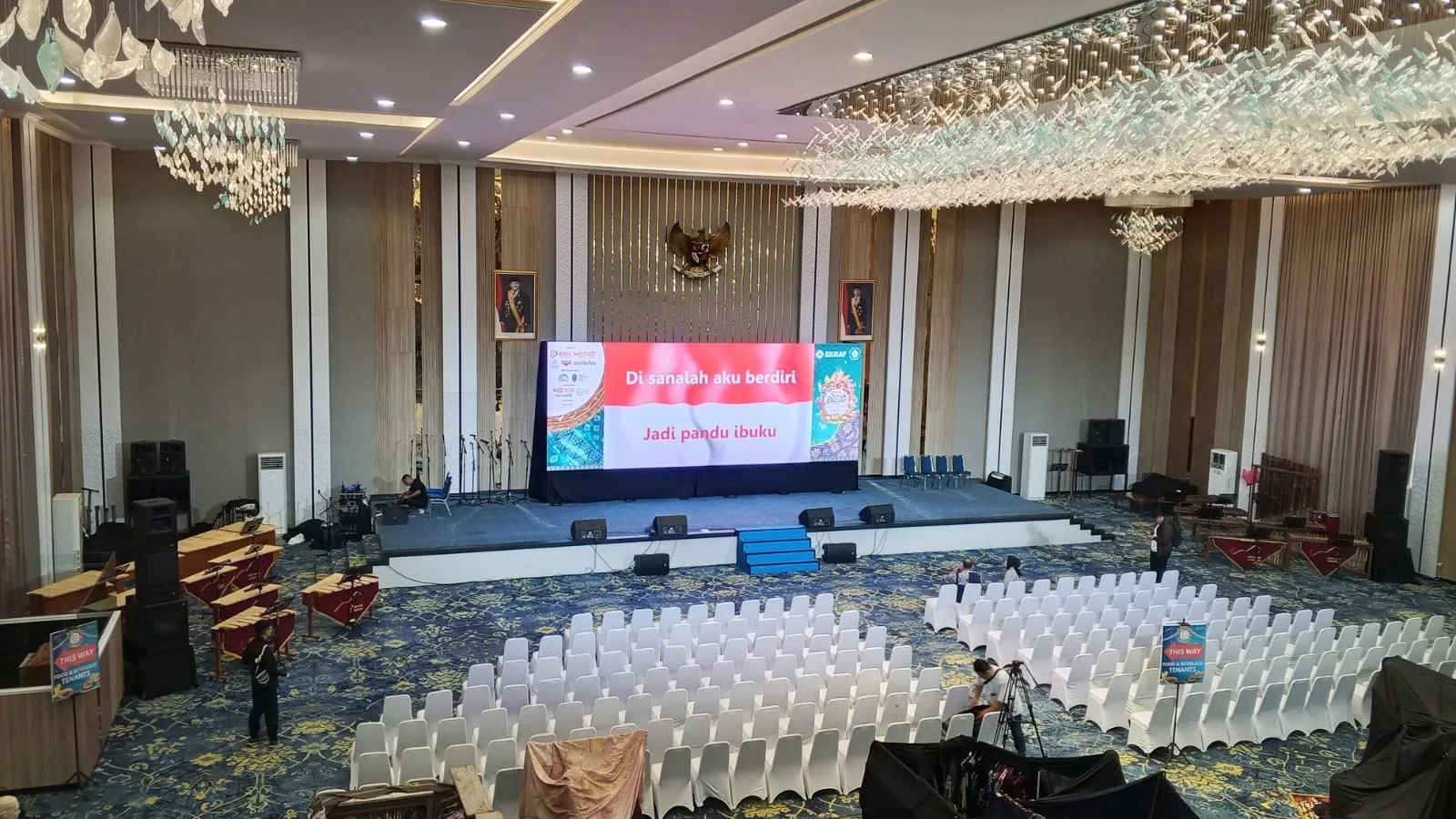
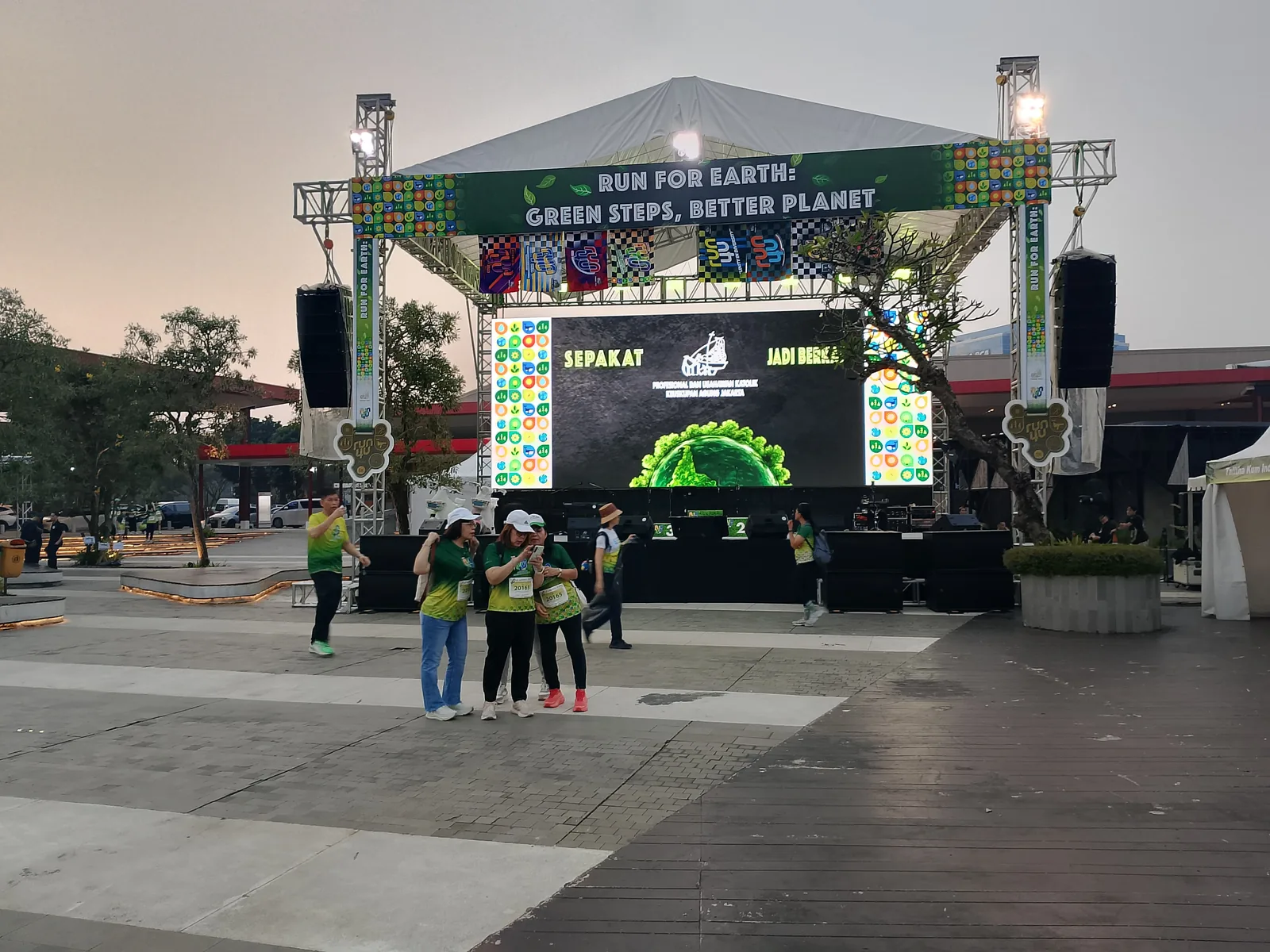
From two outdoor stages
The project photographs from Run For Earth show a lit LED screen and stage at dusk. The photographs from Funwalk Sunset at Sunset Pier, PIK (16 August 2026) show a start gate, a truss stage, and a backdrop during setup. An outdoor stage has to deal with wind, rain, ground surfaces, and access schedules that a ballroom does not. These notes summarise what to discuss with the technical team before any structure goes up.
Permits and site conditions
Confirm early which permits are needed from the site manager and local authorities, including a crowd permit where relevant. Site managers usually also have rules on working hours, vehicle access, and noise limits. Check the surface the stage will stand on: grass, sand, paving, or decking each differ in load-bearing capacity and levelness. Send photos and measurements of the area to the technical team so base plates and ballast can be planned.
- Who grants site permission and how long it takes.
- Surface type and slope of the stage area.
- Vehicle routes for loading and unloading.
Plan for wind and rain
Backdrops, banners, and screens fixed to truss catch the wind like a sail. Discuss with the technical team how the structure will be secured, for example with ballast or guy lines, and agree the weather conditions at which banners come down or the show pauses. Plan a stage roof or covers for electronics, and decide who has the authority to call a stop. Follow BMKG weather forecasts in the days before and on the event day.
Build schedule and safe areas
Outdoor stages and truss are often built the day or night before the event, depending on size and access permission. Plan the schedule from load-in, assembly, lights and screen installation, soundcheck, and technical rehearsal through to strike. While truss is assembled and lifted, keep the work area closed to the public and nobody under suspended loads. During the event, plan barriers, cable covers on walkways, and safe distances between the audience and structures.
- Access hours allowed by the site manager, including overnight.
- Rehearsal time before participants arrive.
- Strike schedule and the deadline to clear the site.
Send one outdoor stage brief
Combine the date, location, site photos, preferred stage size, backdrop, screen and lighting needs, access hours, and permit status into one brief. Include your contingency plan for bad weather. Princess sales prepares a quotation for the stage and truss after these details have been discussed and the site conditions are understood. Attach the site manager's contact details and any rules you have received, so the technical team can adjust the structure plan and working schedule from the start.