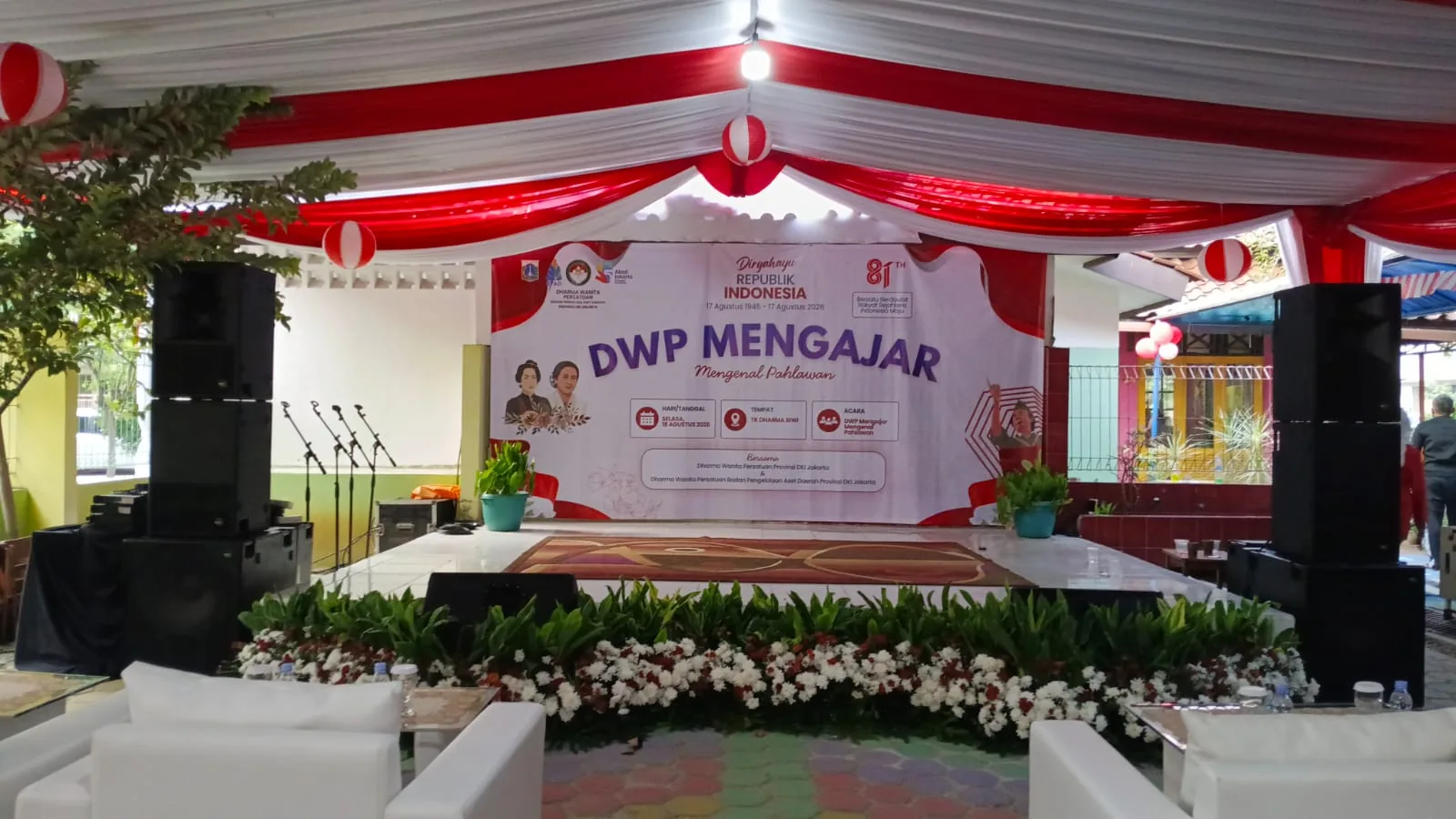
From the DWP Mengajar event
The project photographs from DWP Mengajar: Getting to Know Our Heroes show a stage and speakers under a red-and-white tent, a digital audio mixer at the operator position, and guest seating under the tent. Events under a tent have their own challenges: open sides, outside noise and weather. For a similar event, start the brief with the tent size, guest numbers and what happens on stage. These details help the team choose suitable equipment.
Placing speakers in a tent
A tent has no walls to contain sound, so part of it escapes through the open sides. For long tents, additional speakers midway through the seating area are often considered so the back rows can hear without the front rows becoming too loud. Also consider the surroundings, such as classrooms or nearby homes that should not be disturbed. This helps decide the number and direction of speakers before installation day.
- Tent dimensions and the stage direction relative to guests.
- Buildings or other activities around the site.
- Programme content: speeches, songs, dance or children's performances.
The stage and performer needs
Educational or community events often feature children or participants who are not professional performers. Microphones should be easy to use, and the stage must be safe, with clear steps and edges that are not slippery. Set the stage height according to guest sightlines, not only the tent size. If there are dance or drama performances, state the space performers need and whether they will use music from a laptop or another player. Also plan one short rehearsal with the performers.
Weather, power and the operator position
The mixer and electrical equipment must be protected from rain and water dripping off the tent roof. The operator position should be under cover with a view of the stage. Ask about on-site power: whether it comes from the building, a generator or both, and who supplies it. Cables crossing the guest area should be tidied and covered, especially with many children moving around. Agree the tent installation time first, as sound and stage are usually set up afterwards.
- The power source and its capacity at the tent site.
- A plan for rain during setup or the event itself.
Send one brief the team can work from
Combine the date, venue, access times, layout, rundown and technical requirements in a single version of the brief. Include site photos and the tent layout if available. Separate essential items from optional extras still under consideration, and mark anything not yet final. Also include a contact who can be reached during preparation. Princess sales prepares a quotation after discussing these details with you, so the equipment and crew list follows the actual conditions of your event.